Killing the spreadsheet chaos
XPDX Rentals
XPDX was hitting the operational ceiling that kills most rental businesses: manual state tracking. We engineered an automated fleet management system that removes human error and stops revenue leakage.
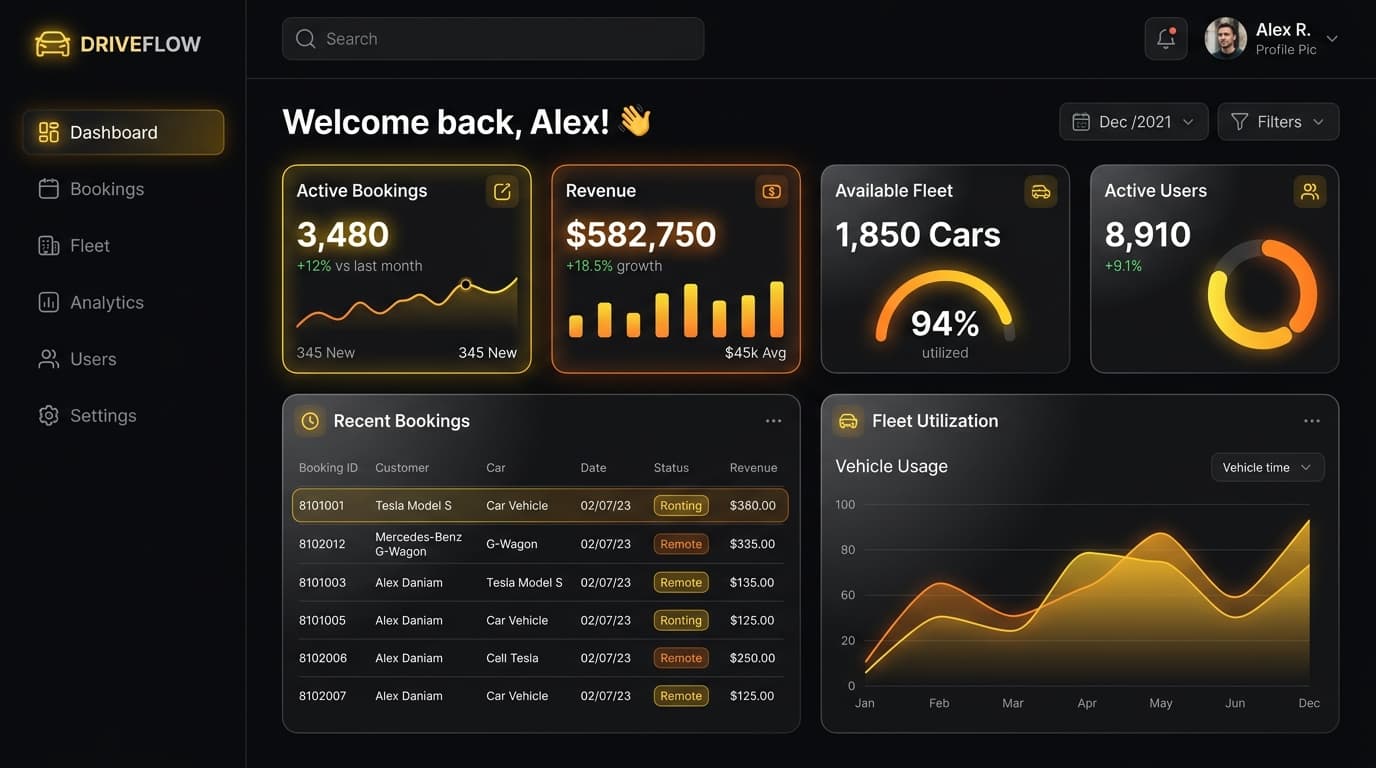
Business context
When a fleet scales, spreadsheets break. Operators were manually updating availability, leading to double-bookings, missed maintenance windows, and a chaotic customer experience. Growth was constrained by the sheer administrative overhead.
Constraints
- →Real-time, bulletproof state synchronization across the entire fleet
- →Frictionless customer onboarding that doesn't compromise security
- →An intuitive control center for operators to manage exceptions
- →Absolute zero tolerance for overlapping bookings
Our thinking
We recognized this as a state-machine problem. Human operators shouldn't be updating availability; the system should. We engineered a strictly event-driven architecture. Every booking, cancellation, or maintenance flag is an immutable event that instantly propagates across the platform.
Architecture
Next.js handles the client and admin interfaces, directly interfacing with a highly relational Supabase schema. We pushed the complex availability logic down into PostgreSQL functions, ensuring that the database itself prevents double-bookings—keeping the frontend fast and dumb.
Execution
We didn't just build a booking form; we delivered a comprehensive operational backbone. We mapped their exact operational pain points and systematically eliminated them with code.
Technology
Results · ROI
100%
automated tracking
Zero
booking collisions
Live
fleet operations
Lessons
Complex business logic belongs in the database, not the UI. When consistency dictates revenue, you cannot rely on the frontend for the truth.